

Dubai unveils Al Shera’a: Inside world’s tallest smart net-positive government building
New headquarters blends renewable energy, cognitive technology and workplace innovation

DUBAI – Dubai has added another striking landmark to its skyline with the inauguration of Al Shera’a, the new headquarters of Dubai Electricity and Water Authority (DEWA), unveiled by His Highness Sheikh Mohammed bin Rashid Al Maktoum, Vice President and Prime Minister of the UAE and Ruler of Dubai. Located in Al Jaddaf, the project is being positioned as a global benchmark in sustainability and smart infrastructure.
Described as the world’s tallest, largest and smartest net-positive government building, Al Shera’a represents a major step in Dubai’s continuing effort to integrate clean energy, artificial intelligence and future-focused design into everyday urban life. During the inauguration, Sheikh Mohammed said Dubai had transformed sustainability from a strategic objective into a way of life that shapes all sectors of society.
He said the emirate’s development model continues to redefine resource conservation, energy efficiency and the transition towards renewable energy sources, while strengthening Dubai’s position as a global centre for innovation.
Al Shera’a
“We inaugurated a new landmark that we proudly regard as an inspiring model in sustainability, energy efficiency, and the use of technology to serve humanity,” His Highness Sheikh Mohammed said.

He added that Dubai’s journey towards the future relies on investment in talent, advanced infrastructure and innovation, describing these as the foundations supporting the city’s ambition to reinforce its global standing.
His Highness Sheikh Mohammed also praised the team behind the project and described every achievement as a starting point for further progress and innovation.
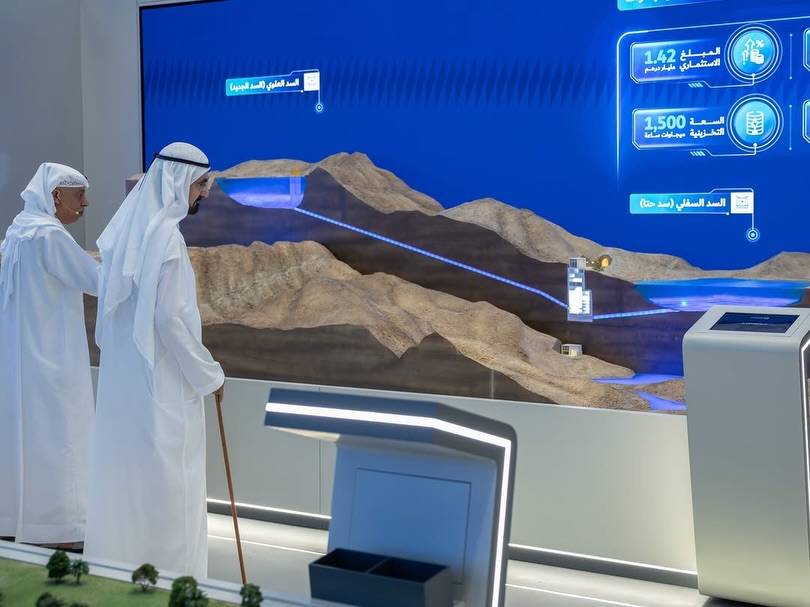
Several senior figures attended the inauguration ceremony, including Sheikh Ahmed bin Saeed Al Maktoum, President of the Dubai Civil Aviation Authority, Chairman of Dubai Airports and Chairman and Chief Executive of Emirates Airline and Group; Sheikh Mansoor bin Mohammed bin Rashid Al Maktoum, President of the UAE Olympic Committee; His Highness Sheikh Majid bin Mohammed bin Rashid Al Maktoum; and Sheikh Mohammed bin Rashid bin Mohammed bin Rashid Al Maktoum.
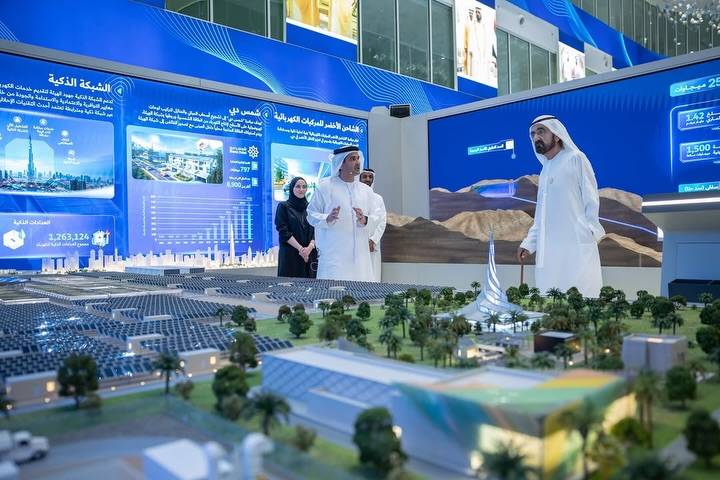
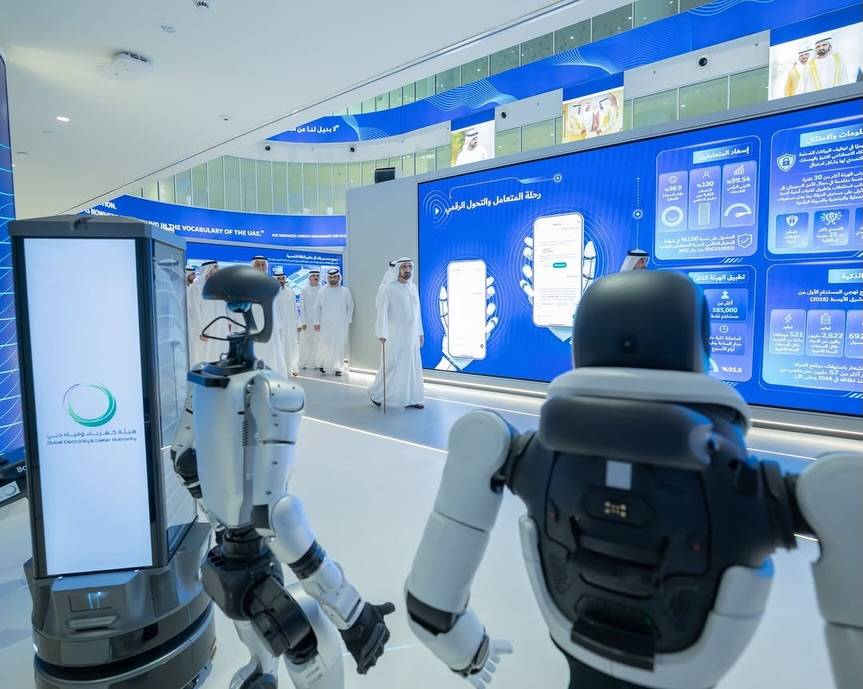
Earlier, His Highness Sheikh Mohammed was welcomed by Majid Hamad Rahma Al Shamsi, Chairman of DEWA’s Board of Directors, and Saeed Mohammed Al Tayer, Managing Director and Chief Executive Officer of DEWA. Before the formal opening, he toured an exhibition inside the building that showcased DEWA’s history, major projects, initiatives and global achievements.
Intelligent core
During the tour, Al Tayer outlined one of Al Shera’a’s defining features: an advanced cognitive operating system designed to think, sense and respond. The concept introduces a digitally integrated work environment that relies on artificial intelligence and automation rather than traditional building management systems.
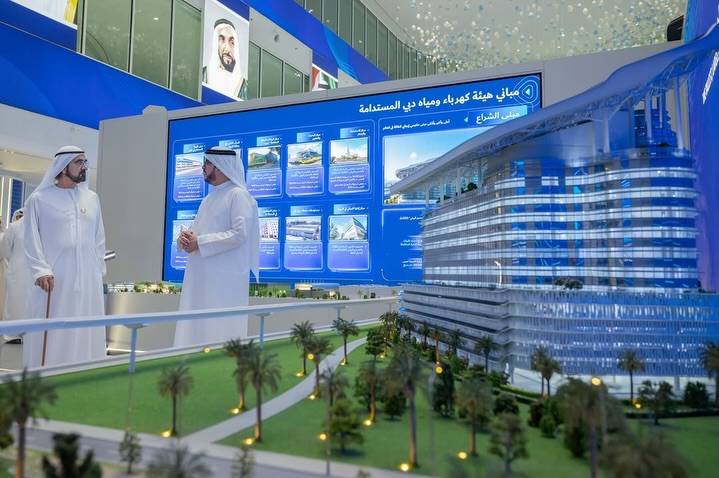
The integrated system combines Internet of Things technologies, AI and big data analytics to manage and coordinate operations across the building.
More than 110,000 smart sensors continuously monitor environmental and operational activity in real time. Supporting infrastructure includes over 1,500 wireless access points and more than 3,200 network devices designed to maintain synchronisation across connected systems.

Together, these technologies generate more than 1.9 million automated control commands every day. The continuous stream of data enables systems to communicate instantly, improve performance and create seamless operational integration.
Al Tayer said Al Shera’a reflects Sheikh Mohammed’s vision of anticipating the future through advanced technologies and innovation.
He said the project seeks to establish a new international benchmark for buildings that generate more clean energy than they consume while placing people and sustainability at the centre of workplace design.
Smart systems
At the centre of the operation is the AI-powered Al Shera’a smart application, acting as a single digital platform connecting nearly 100 independent systems throughout the building.
The application manages functions ranging from smart parking and access control to lighting, elevators, HVAC systems and air quality monitoring.
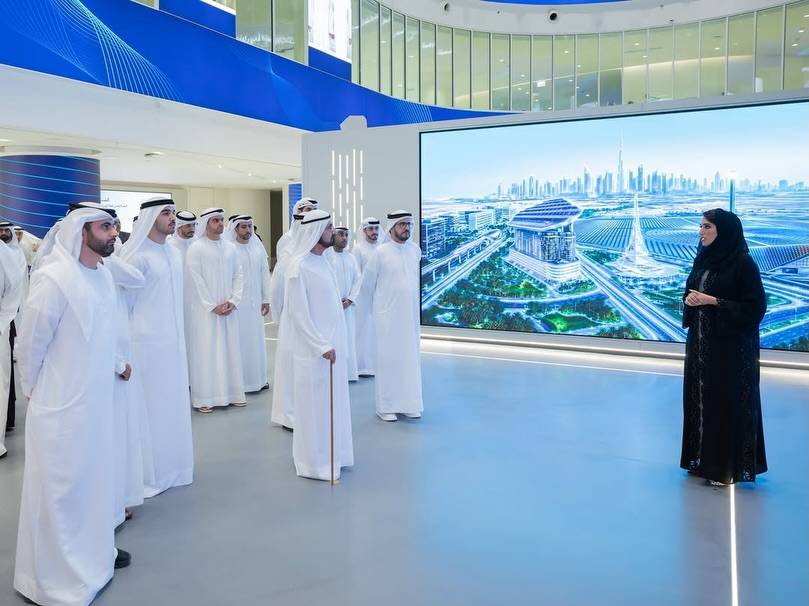
It also oversees dynamic workspace allocation, resource bookings, asset tracking and shared mobility services.
The app contains 167 operating functions designed through a user-focused interface intended to improve employee wellbeing and simplify daily interaction with building services.
Through digital intelligence, systems can automatically adjust based on actual demand and occupancy levels. Resources are allocated according to real usage patterns, reducing unnecessary consumption while enhancing efficiency.
Al Tayer said the use of AI transforms traditional processes into adaptive systems capable of learning and responding continuously.
Clean energy
The sustainability strategy behind Al Shera’a extends far beyond automation.
The building has a total electricity generation capacity of 5 MW produced through two separate photovoltaic systems.
The first consists of Building Integrated Photovoltaic panels installed across the façade. A total of 251 panels spread over approximately 9,000 square feet provide a capacity of 187 kWp.
The second and significantly larger installation includes around 8,400 photovoltaic panels fitted across rooftops, podium structures, ground-level areas and shading systems. These installations cover more than 200,000 square feet and contribute approximately 4.821 MW of generating capacity.
Robotic systems are used to clean and maintain the panels, helping preserve efficiency and maximise output.
The headquarters is also directly linked to Al Jaddaf Metro Station through a dedicated pedestrian bridge. The connection is intended to encourage greater public transport use while reducing road congestion and lowering carbon emissions.
Named after the Arabic word for “sail”, Al Shera’a symbolises movement and openness while reflecting DEWA’s focus on innovation and sustainability.
Its architectural identity also draws on traditional Emirati homes, merging local design influences with contemporary engineering.
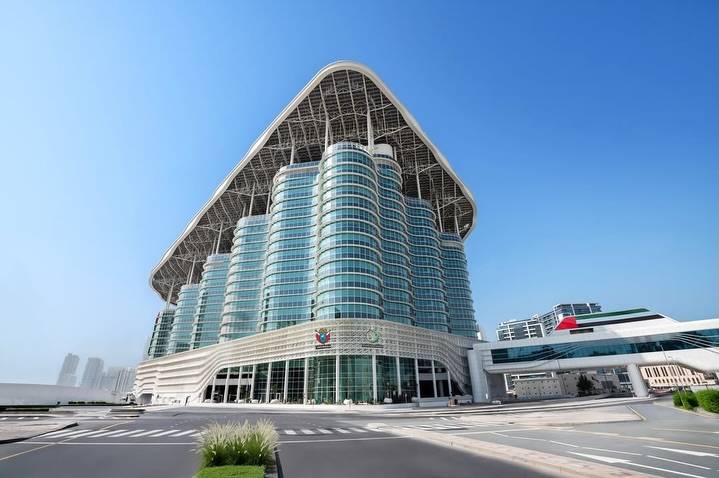
The development spans more than two million square feet and comprises 19 floors in addition to a ground floor and basement. It has been designed to achieve LEED Platinum certification and WELL Gold certification, internationally recognised standards for sustainable and people-centred buildings.
Beyond office spaces, the headquarters includes conference facilities, training rooms, exhibition areas, an innovation centre, sports facilities and a nursery for employees’ children, creating a highly integrated workplace environment driven by intelligent design and advanced technology.